Universities Are Now Teaching AI to Professionals. Here’s Why That’s the Right Move
Respected institutions are launching short AI courses for working professionals, and with agents taking on more of the busy work, understanding how they work has never mattered more.

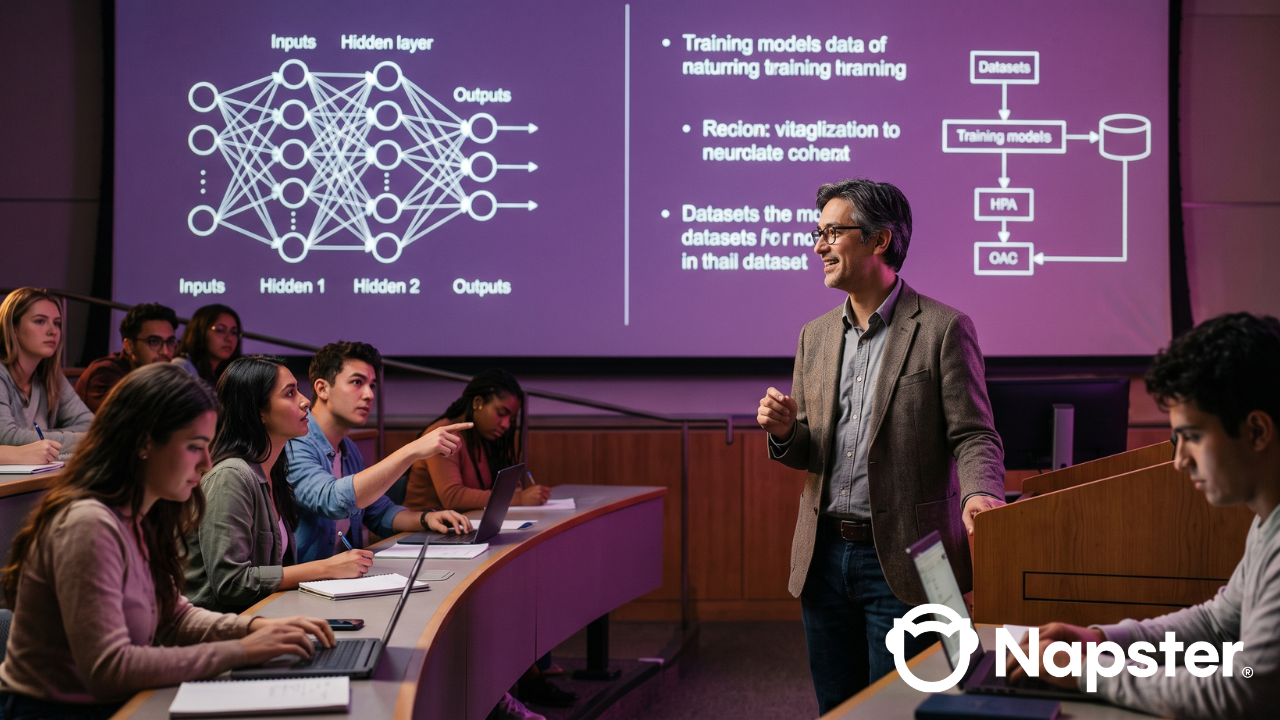
This spring, Hofstra University faced heat from graduating students when it employed an AI platform called Tassel to read their names at commencement. In an op-ed published in the student newspaper, one student called this decision “a slap in the face.”
Months later, the university is taking a new, sharper approach: It’s launching a five-week AI course to help working professionals embrace these tools. Per Long Island Business News, the virtual course will launch this fall. The class, called AI for Working Professionals, will “explore how AI can support writing, research, data analysis, communication and project management,” the publication reports.
It will be taught by Mitch Kase, executive director of the university’s Center for Excellence in Learning, Teaching and Assessment. “Through this course, I want participants to move beyond simply asking AI questions and begin thinking critically about where it can add value to their everyday work,” Kase told Long Island Business News. “The goal isn’t to become an AI expert. It’s to become a more confident, thoughtful and effective user of AI.”
Hofstra is in good company as far as this thinking is concerned. Eastern Washington University (EWU) now offers a five-week AI for Professional Work course aimed at managers, analysts, educators, communications staff, and administrators. And institutions like Imperial College London have integrated AI tools like Napster Learn to help personalize higher-ed experiences and give students a dynamic, 24/7 resource for learning.
As businesses shift toward human and AI employees working in tandem, the instinct to provide AI training is a smart one. Per the State of Enterprise Learning Report 2026 published this month and reported on by 2U, 83% of respondents said that AI skills are a priority for the workforce. But only 29% said their companies have “built mature AI capabilities.”
The need for a comprehensive understanding of AI is only going to increase, especially as agents become part of the everyday structure of office life and take on routine tasks to help humans be more efficient.
Employees who understand how to use AI tools will build the judgment to hand off the right tasks and get time back to do the work that needs their attention.
AI education is crucial.
AI is already part of professional life. The real problem is that most businesses provide the technology and hope employees will learn it themselves, rather than teaching them how AI is best used for their individual work. You wouldn’t hand an untrained warehouse employee the keys to a forklift on day one and expect them to know what to do with it (let alone use it safely). Upskilling courses, like the ones Hofstra and EWU offer, teach the foundations: what AI can and can’t do, how to give it clear instructions, how to evaluate its output, and how to use it responsibly.
When employees have a clear grasp of these skills, they know how to regulate the agents taking on some of the workload, where AI is most reliable, and where it predictably fails. That’s the foundation for knowing what to hand an agent and what’s best for the actual human to tackle.
Ethics belong in the curriculum, too. Employees need to know how to protect private data, spot bias, credit sources, and recognize when a human should make the call, not their AI coworker. The EWU course, for example, covers effective prompting, responsible use, workflow design, and evaluating AI-generated content. That mix of practical skill and judgment is a very useful template for employers to implement.
New roles need new skills.
On a recent CES podcast episode, Napster's Chief Product Officer Ziv Navoth described “agent manager” as a job that didn't exist a year ago. This job is exactly what it sounds like: a human who manages AI agents. “At Napster, we treat every agent the way you treat a new hire. It has a job description, and it’s tested against that job before it goes anywhere near a customer or an employee.”
The role was introduced to create individual accountability for an agent’s performance, something that encourages responsible use of agents as well as the product’s improvement over time “It’s one person, one agent. They build it, they train it, they own everything it does. It’s like they’re the CEO of that agent.”
In other words, an agent manager directs AI agents, sets their goals, checks their work, and decides when to step in. No one in the workforce today was born knowing how to manage an AI employee. These skills have to be taught, and the people who learn them first will shape how every team works.
Educating people on AI is better than forcing it on them.
When Hofstra used AI to read graduates' names at commencement this year, it was met with forceful resistance from students. Hofstra student Jesse Silver’s petition against the AI voice gathered 627 signatures.
“When I signed up for graduation this fall, I was asked to input my name, and every single time the AI was unable to get my name correct,” Silver wrote. “I do not have a name that is complicated or difficult to pronounce; my last name is ‘Silver.’ Yet, the AI continuously got the inflection wrong. Upon asking other students, I found that I was not alone in my struggles.”
That particular scenario only involved a commencement ceremony, but the students’ worries echo those of people in the working world: doubts about accuracy and frustration at having no say in how AI is used.
But the lesson isn’t to ignore AI; again, it’s already here. The real takeaway is that education has to come before this technology is rolled out, not after. People resist AI that's done to them. They embrace AI they understand and helped shape.
What should employers should do now?
- Fund the training. Sponsor courses like Hofstra’s or build internal programs specific to the work they do. Short formats make this realistic without pulling people off the job for months.
- Build in time to practice. Making someone attend a one-time seminar with a pre-prepared deck about AI in the workplace won’t be sufficient. Include the AI into the real work people have to do, and give them time to utilize it.
- Make employee-informed decisions. Ask teams where AI would help them do their jobs better (and where it wouldn’t) before making them use it.
- Treat AI fluency as a core skill. As employees become more fluent within AI tools, recognize those skills in hiring, development plans, and promotions.
This is the next access revolution.
These days, it’s not about whether AI exists. It’s about who has access to AI skills, and right now, that access is uneven. Some employees are being trained, supported, and trusted to experiment. Many are left to figure it out alone. That shouldn’t be the case.
Programs like Hofstra’s and EWU’s are a great blueprint for the future. The companies that thrive will be those that recognize that AI education is just as important as AI access.
Related posts
Stay up to date with the latest platform updates, feature launches, and important news.



Press inquiries.
Journalists and media professionals can contact our team for interviews, information, or additional materials.