Necessity, Meet AI: Two Napster Tools Born From Our Own Workplace

Whoever said necessity is the mother of invention clearly anticipated the advent of AI.
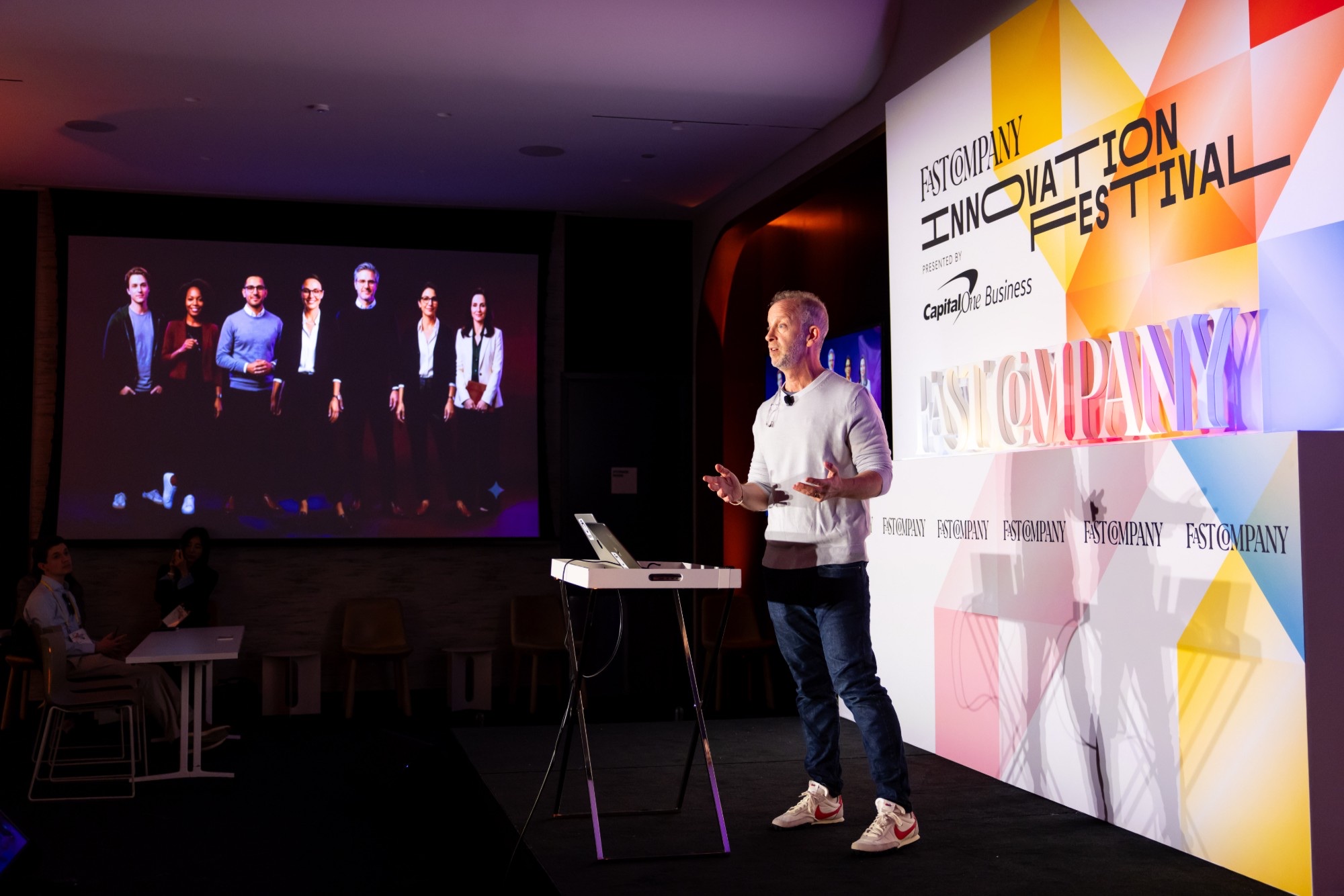
At Microsoft Ignite in San Francisco this week, we introduced two products that we created at Napster because we needed them. They were built to solve internal issues – a lack of time, a lack of resources, in many cases both – and became part of a Napster product suite that now features multiple pieces of hardware, an API, and software solutions for the workplace, people management, and education.
In the past week, I’ve learned a product launch means more when you’re your own first customer. The reception is validation that the problems you faced are ones your colleagues and competitors struggle with, too. The interest is proof that you can turn something meant for a handful of people into a working solution for companies with tens of thousands of employees. And the risks that paid off are a reminder that your team is as talented as you think it is, and the ideas you believe in are worth betting on.
It’s been a busy few days at Moscone Center, with hundreds of demos of and discussions about our new products and Omniagents. But amid all the Microsoft madness, I wanted to share a bit more about what we released, why we think it’s valuable, and what comes next for Napster as the end of the year approaches.
First, a look at what launched this week.
Napster Pulse
When Napster Chief Technology Officer Edo Segal was managing about 100 engineers, he ran into an obvious, seemingly unsolvable roadblock. He wanted to get individual status updates from everyone, so nothing slipped past him, but couldn’t have an actual check-in with each engineer each week; there just weren’t enough hours in the day.
Instead, he used AI to build a digital twin of himself and a platform where it could have conversations with those engineers. In the interview with the Twin, employees could ask questions and get answers in real time, without having to wait for a meeting that might be impossible to schedule. While this ended up being the solution our own employees needed, even we were skeptical at first.
We asked, “Who wants to be interviewed by an AI?”. It turns out, in our internal testing, people preferred this type of interaction.
The reason why comes down to flexibility, convenience, and quick results.
When a manager or HR representative sends out a survey gauging employee satisfaction, they receive a series of ticked boxes and half-hearted open-ended responses in return. Without a real conversation, employers lose the ability to ask follow-ups, infer meaning, and get limited information about what their direct reports or employees actually want.
But a conversation on a person’s own timetable and their own terms with a digital twin provides real, helpful context in a less stressful environment. People freeze up when they are put on the spot to provide critical feedback for their boss; the stakes are lower when the listener is synthetic. We call this product Pulse because it provides that crucial touch-point interview that’s needed to keep team relationships flowing and productive.
Agents run the conversations, and instead of providing a manager with 500 verbatim transcripts, it pulls out the most relevant parts to form a short summary. From there, the manager can address the team’s pressing concerns and schedule person-to-person follow-ups to fix anything that’s really broken.
Those dynamic human-to-human conversations should still happen, but our people-management tool provides the bridge until those one-on-one conversations can happen. It’s a product we needed and one we believe other companies will need in order to understand a dynamic workforce that no current solutions can keep up with.
The Enterprise Plan on the Napster App
Another product we shared this week allows everyone in a company to get the kind of support executives have relied on for decades.
The Enterprise Plan for the Napster App, launched on desktop Tuesday, gives every employee a crew: a team of specialized agents that do work for you rather than one do-everything assistant. That’s how people already get good work done. You don’t rely on one superhuman; you bring together a team of experts. We launched the Sales and Life Crews alongside the new app experience after some promising internal testing, and we can’t wait to see what our partners can do when each of their people has a team backing them up.
These agents are coworkers, not simply assistants. Each one has its own computer in the cloud and sees a task through to the end. An assistant suggests; a coworker does.
Several companies have launched do-it-all personal agents in recent months, but we went with the Crew approach, even though it took more time and attention. Feedback from Napster’s own salespeople and staff, who put the product to use for more than a month, told us it would be worth the wait.
Our own sales team ran the Sales Crew on their actual accounts, and the biggest difference came from what the company taught the crew: our products, our pricing, our discount rules. Onboarding a crew, it turns out, looks a lot like onboarding a new hire: You info-dump, keep an eye on early results, correct mistakes, and reward good work. And like a new hire, our agents got more valuable the more they learned about how Napster’s business works.
The future of the workplace is one in which we will be working in tandem with AI. As we create our coworkers, we have to learn how to be good colleagues to them, too. You don’t get that insight from polishing a demo. You gather it from giving smart people the product and listening to their advice, even if it temporarily slows you down.
We’re live at Microsoft Ignite talking about this new kind of working relationship, with both Pulse and the app available to try out. Find us at Booth 1754 (R) for demos.
Related posts
Stay up to date with the latest platform updates, feature launches, and important news.

Press inquiries.
Journalists and media professionals can contact our team for interviews, information, or additional materials.