5 Things Napster is Watching for at Microsoft Ignite
Workshops, panels, and sessions worth checking out during one of the biggest tech events of the year.

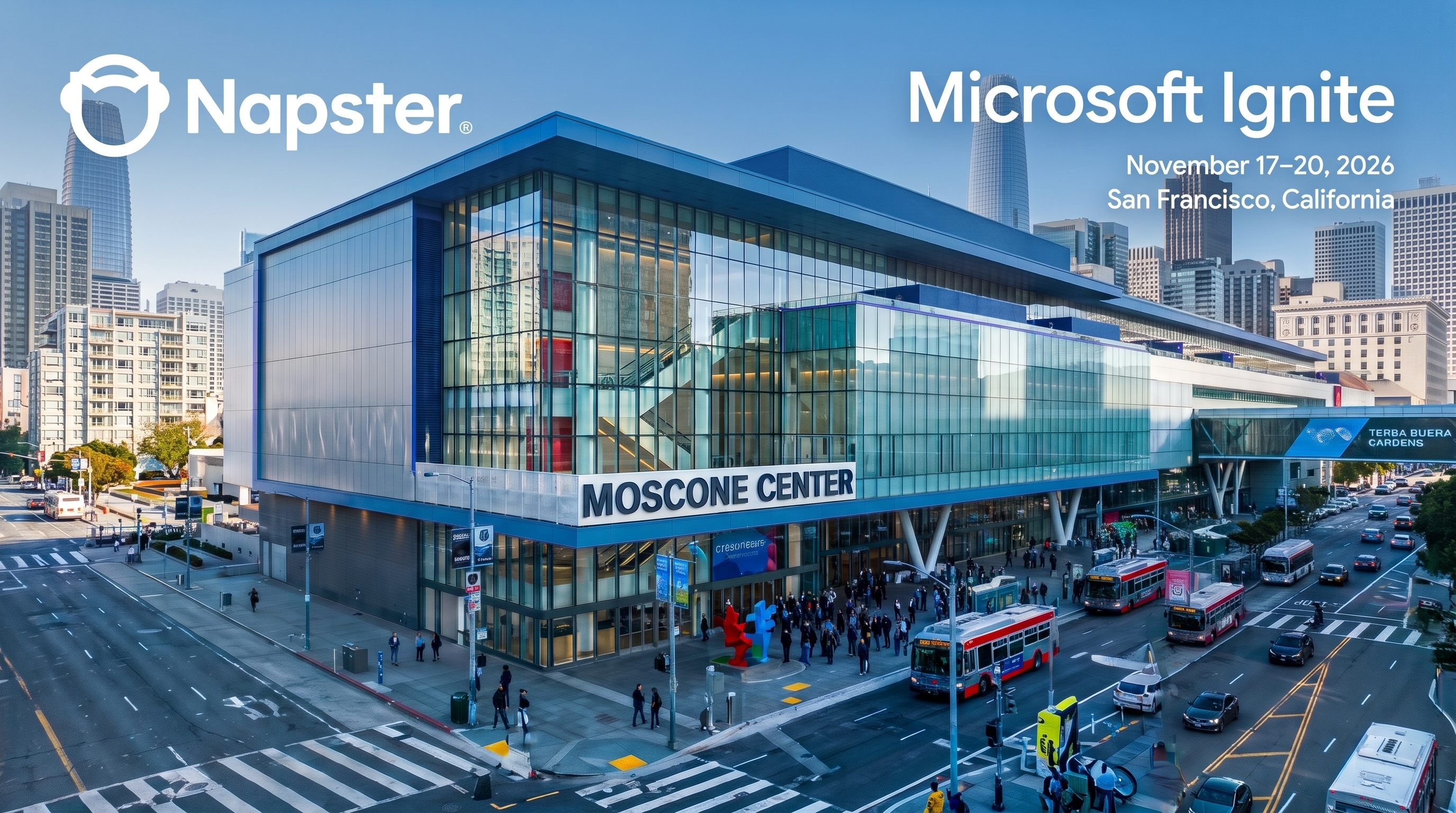
Next week, nearly every booth at Microsoft Ignite will be showing off an agent. AI that does work for you is becoming the baseline, which raises the bar for what’s worth stopping to see.
At Napster, we’re looking for the agents that leave the chat window. That means agents that hold a conversation over a noisy concourse, work in a physical space, and keep improving after launch.
Some of the most interesting work on these problems is happening in sessions across the agenda from Nov. 17-20 in San Francisco. Here are the ones that caught our attention, plus where to find Napster’s team and check out its Omniagents at the Moscone Center.
Where agents matter most in retail
Activate your retail intelligence: High-value agentic AI use cases
Wednesday, Nov. 18, 9-9:45 a.m. PT | Breakout
Retailers are deciding which jobs to give agents first, and this breakout looks at the use cases they’re buying. We’ll be listening for where the store floor and the phone line rank next to the website, and thoughts on whether companies are going with one agent across all surfaces or a fleet of personalities.
How Intel takes AI out of a chatbox
AI beyond the screen. Intelligence in motion.
Wednesday, Nov. 18, 1:20-1:35 p.m. PT | Lightning talk
Intel’s lightning talk runs two live demos. In the first, a robotic arm recognizes objects and carries out actions an AI plans for it. In the second, 3D LiDAR turns anonymous foot traffic into real-time safety and operations data. Spatial awareness is what lets an agent in a physical space notice someone approaching before they say a word.
Two hours later, Napster CTO Edo Segal will speak at Intel’s booth about the intersection of cloud and local AI systems. His 3:30 p.m. PT talk, “Hybrid AI: Better Performance, Security and Economics,” will focus on how enterprises are pairing cloud infrastructure with high-performance local computing to move away from more expensive, cloud-only deployments. Edo will break down how hybrid AI gets built and what it does for performance, security, and cost, and cover how Napster, Intel, and Microsoft are working together to give businesses both.
If you’re in the mood for an appetizer, check out Intel and Microsoft’s theater session “Local when it matters. Cloud when it counts.” on Tuesday, Nov. 17, at 2-2:25 p.m. PT.
Physical AI that reads the room
Grounding AI in the Physical World
Wednesday, Nov. 18, 2:15-2:40 p.m. PT | Theater session
An agent in a store has to know things nobody tells it, like who just walked up and whether the line is growing. This session turns real-world sensor signals into physical AI with Foundry Local and the Azure IoT Hub, and it names retail as a use case. Foundry Local runs AI models on the device itself, which points toward a hot trend in the industry of combining adaptive cloud capability with local infrastructure.
Agents that learn on the job
Turn your data into AI advantage with Training in Microsoft Foundry
Wednesday, Nov. 18, 4:15-5 p.m. PT | Breakout
Once an agent launches, it starts meeting real customers, and those conversations are the best training data it will ever get. This breakout covers reinforcement learning and production feedback as ways to keep improving models after they ship.
Napster CTO Edo Segal takes that idea further on Thursday in “Leverage recursive self-improvement to train better AI agents” from 2:50-3:15 p.m. PT. Recursive self-improvement usually comes up as a risk, but Segal will make the builder’s case for RSI. That means agents that train against synthetic customers, fix their own tools when they break, and improve even when they get it right. He’ll cover how to build an agentic RSI workflow responsibly and what it means for the next wave of agent deployments.
Later that afternoon, Napster CEO John Acunto joins the Live at Microsoft Ignite broadcast from 3:45-3:55 p.m. PT. He’ll cover Napster’s evolution into an AI company and why the team is leaning into agents with persistent memory to better understand their business and help companies understand their customer.
Voice agents that survive a crowded space
Voice agents in Microsoft Foundry: Prototype to production in 45 mins
Thursday, Nov. 19, 4-4:45 p.m. PT | Breakout
Voice demos tend to happen in controlled environments. Production happens amid chaos, on a packed show floor, with spotty WiFi, and a customer who interrupts mid-sentence. This breakout covers building speech-native agents for web, mobile, Teams, and telephony, and making them reliable enough to ship. The interesting part is how quickly builders can do this now and the ability to deploy across multiple surfaces in one session.
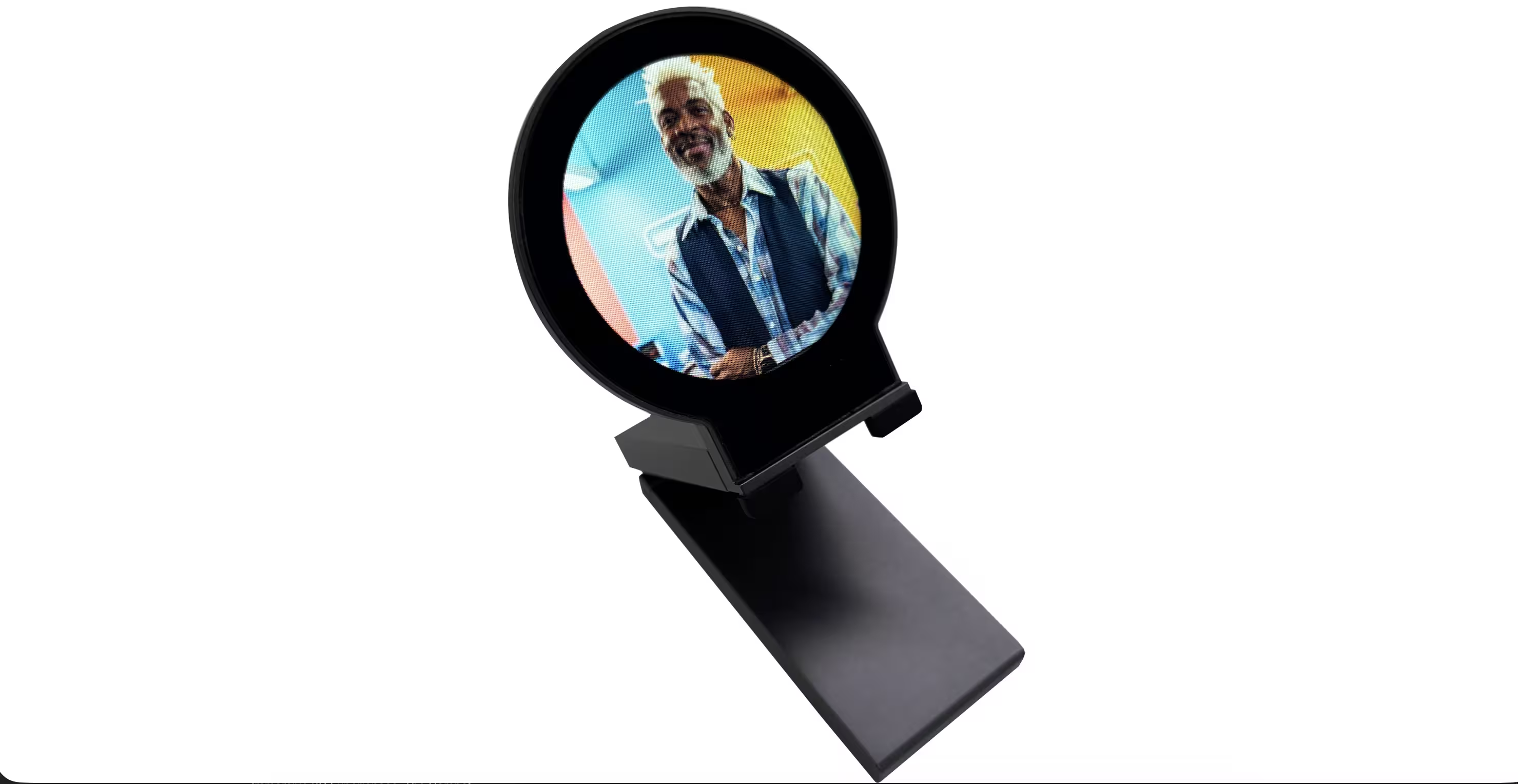
If the voice layer fails, though, nothing downstream gets a chance. Napster Station is built to take those agents one step further and into the real world: It hears the person in front of it over a busy room, and the Omniagent behind it answers the phone when that same person calls back. We’ll be stopping by this breakout to see how others are thinking about voice AI and where embodied solutions that have a physical presence fit in.
Find Napster at Microsoft Ignite
Beyond the sessions and getting our steps in, Napster has a few exciting announcements planned for the showfloor during Microsoft Ignite. Stop by booth #1754R to see an Omniagent live, book a meeting for dedicated time with the team, and learn more about Napster’s partners and its Azure Native solutions throughout the conference.
Related posts
Stay up to date with the latest platform updates, feature launches, and important news.


Press inquiries.
Journalists and media professionals can contact our team for interviews, information, or additional materials.