AI Is Officially Leaving the Chat: Physical AI Is the Emerging Reality
Chat AI gives you answers. Physical AI gets things done. Here’s why agents are leaving the chat box and where you’ll meet them first.

In 2026, AI still looks like a chat box.
Getting a jump on your holiday shopping? Plug it into the AI feature on your go-to retailer’s website, and you suddenly have options for every person on your list. Need help organizing your notes from your professor’s lecture? Pick an app, and it has your back. You can even get a detailed workout plans, meal plans, budgeting help, and so much more drafted from text-based AI.
But notice what happens next in every one of those examples: You take over.
You still click “buy” on each gift, send the notes to your team, and drag yourself to the gym on the right days. AI in a textbox is great at answers, but you’re still doing most of the heavy lifting (pun mostly intended).
That’s changing. With agentic AI, like the products Napster offers, you get real help from an expert that can do work for you. For example, instead of trying to parse through your class notes to make sense of them, you can ask your professor’s Digital Twin, via Napster Learn, to break down a confusing concept for you in a conversational way that’s easy to understand.
It’s a step in the right direction, but most of these agents still live behind a screen: on your phone, your laptop, your browser tab. The next leap is AI that meets you in the physical world. Napster Station already hints at what that looks like, putting a lifelike AI concierge in airports, hotel lobbies, and stores, where it can greet you, answer questions, and remember you the next time you check in by phone.
The next step is something that goes further than a face on a display. It’s AI that can understand a room, figure out what needs to happen, and get machines moving to do it.
The AI industry is headed off chat and into the room.
If that sounds far off, it isn’t. At CES 2026, physical AI was the talk of the show, and Nvidia CEO Jensen Huang called it hardware’s “ChatGPT moment.” The floor was filled with robots that can do the laundry, self-driving systems, and wearables like hair clips and pet collars. The question was no longer whether AI will leave the screen, but how people would actually work with it once it did.
This month, OpenAI CEO Sam Altman confirmed that OpenAI is building its own humanoid robot, with a first demo targeted for 2027. Notably, Altman says the body isn’t the hard part. The real challenge is the “brain”: an AI that can understand the real world, make decisions, and carry out tasks reliably.
On the other side of the world, Korean telecom giant KT is tackling that brain problem at scale. Its K RaaS platform doesn’t build robots at all. Instead, it connects robots, facilities, and IT systems so AI agents can read a physical environment and coordinate the work. In one demo, a humanoid robot inspects parts on a production line, then hands transport jobs off to logistics robots, with no human dispatching required.
KT is already testing the approach at a shipyard, with quadruped welding robots and autonomous painting robots, and says it plans to bring the technology to hotels, retail, and healthcare next. And it’s hardly alone: Companies such as Siemens hope to use AI to automate 70% to 80% of factory manufacturing in the future, doubling the current figure of 30% to 40%.
Napster is ready for what’s next.
With OpenAI aiming for a 2027 demo of their robot and KT already in the retail, hotel, and healthcare spaces, it’s clear that this is where AI is headed. Napster is already on the ground floor of these changes and helping customers and employees meet AI face-to-face with Napster Station and Napster View, and by advocating for embodied AI rather than the traditional textbox.
As agents gain the ability to coordinate machines behind the scenes, someone still needs to be the face and voice up front. Napster is already positioned to be at the forefront of the future of physical AI. At ITB Berlin in March, Napster Station acted as a single point of contact for MeetChina’s tourism platform, letting visitors handle shopping, payments, and navigation simply by talking to it.
How will people work with this tech?
The way Napster sees it, physical AI represents an immense opportunity for future workforces. We already know that agentic AI, like the Crews in Napster App, can streamline work in a way that allows the high-level tasks to be completed by human employees, while the agents take care of the busy work. That kind of efficiency is only going to continue once AI enters the room.
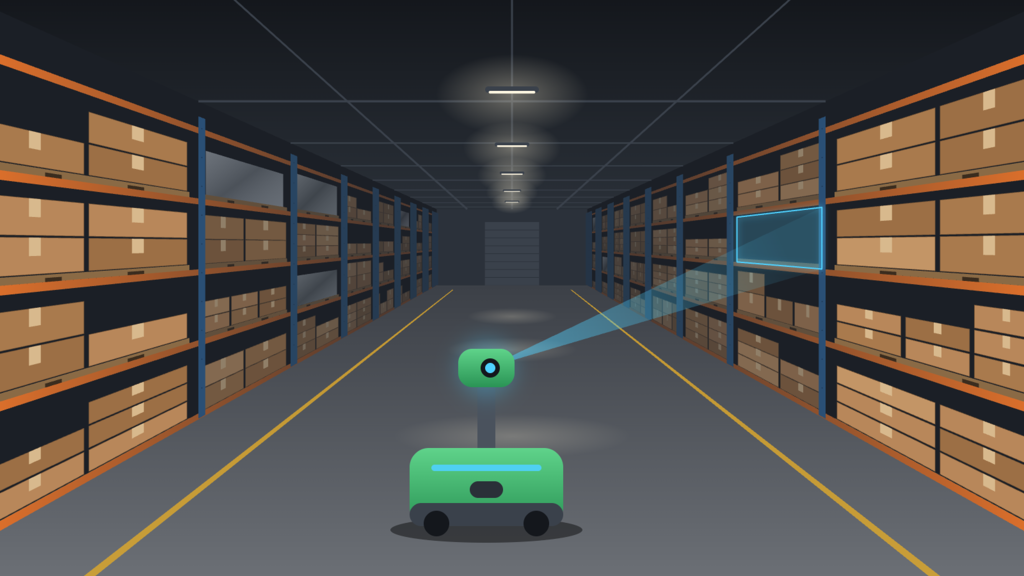
Imagine a robot that uses cameras and AI to recognize every product and spot what’s missing or misplaced. That robot can do inventory for a warehouse overnight so when the inventory team comes in the next day, they already have a list of what’s missing and can start solving problems.
AI is leaving the chat and entering the room. And that’s a good thing.
Related posts
Stay up to date with the latest platform updates, feature launches, and important news.




Press inquiries.
Journalists and media professionals can contact our team for interviews, information, or additional materials.