It’s imperative that we solve the AI ownership problem
Napster CEO John Acunto on the AI industry's biggest blind spot: who owns the prompts, ideas, and data you put into it.


Every prompt you type into a standard AI tool leaves your hands the moment you hit send. The model learns from it. The company behind it monetizes it. You get the answer and nothing else.
But what you actually handed over is far more revealing than what the LLM provides you. I should know. Napster is an AI company, and an organization with an admittedly checkered history when it comes to data ownership. But that history also gives us foresight, and we’re seeing similar patterns emerge in 2026 to those that existed in 1999.
Growth first, governance later. That’s a dangerous mindset, but it’s one that is embedded in frontier tech. This is the defining issue of the next decade in technology. Nobody is treating it that way.
Your prompts expose what you're building, what you're afraid of, what decisions you're weighing, and how you think through problems. That profile is more valuable than your browsing history ever was, and right now, in most cases, you don't own any of it.
The conversation that isn't happening
Regulators are focused on AI safety, bias, and misinformation. Those are real concerns. But the ownership question sits underneath all of them, and it is barely on the agenda.
When you upload a document to an AI platform, draft a business plan inside one, or use it to think through a sensitive personnel decision, you're contributing to a dataset that the platform may use to train future models, improve its product, or generate insights that benefit its other customers.
Most users don't read the terms of service. Most businesses don't negotiate them. But in the context of AI, the result is much more problematic than it used to be. We’re seeing a massive, quiet transfer of intellectual capital from the people generating it to the platforms collecting it, with little leverage for the customer who just signed themselves away.
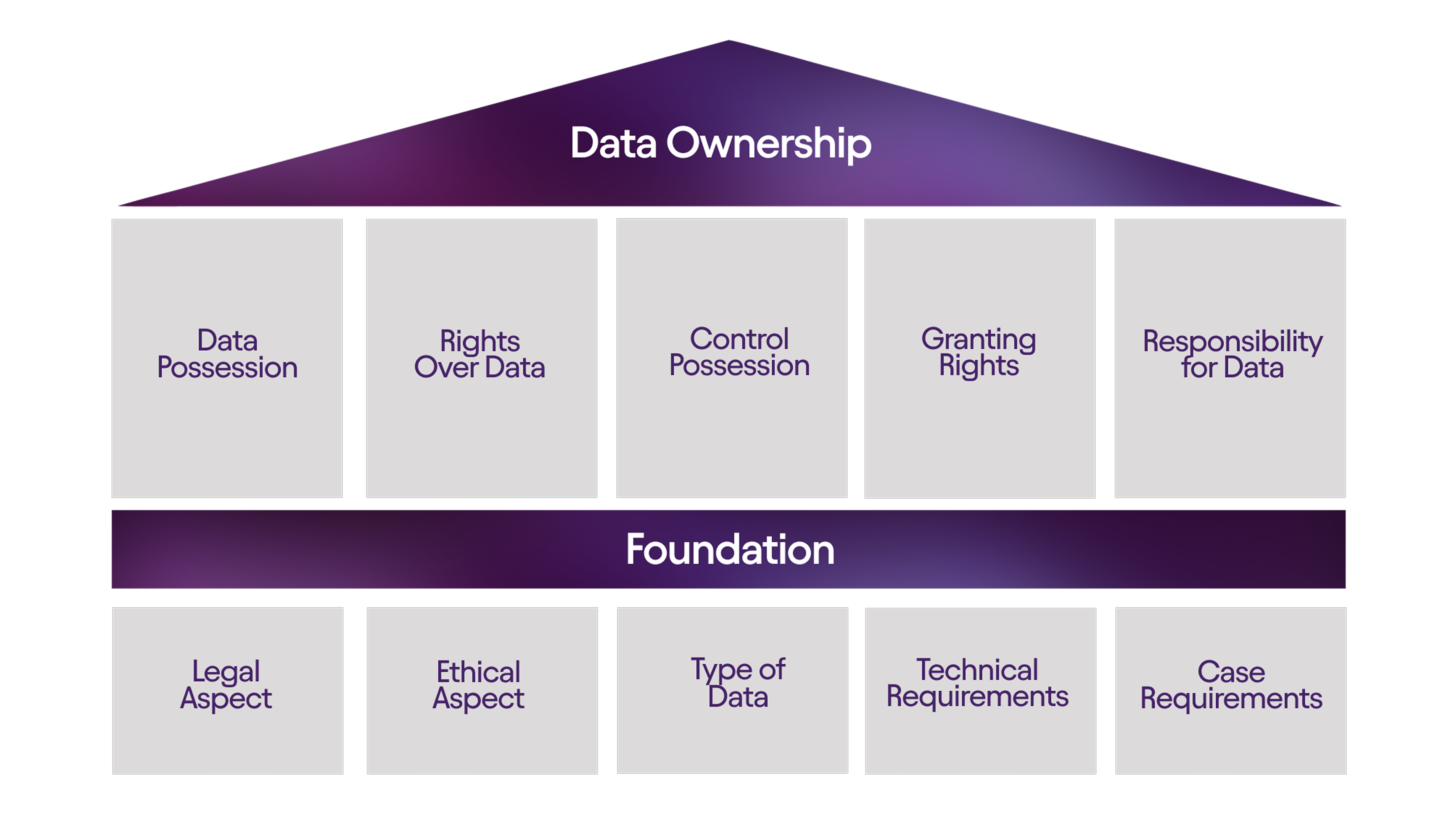
This isn't a theoretical risk. Enterprise contracts are already becoming battlegrounds over who owns AI-generated outputs, who can use prompt data for model training, and what happens to your information when you stop paying for the service. But individual consumers and small businesses are largely unprotected. They're the ones contributing the most data with the least leverage.
At Napster, our principle is straightforward: Customers and businesses should own their data. The prompts you write, the AI agents you build, the content you create, the personas you develop – all of it needs to be yours, not the tool’s. Letting a platform claim ownership of your inputs or your relationship with the AI you've spent months training to understand how you work? That’s no different than letting a phone company claim ownership of your conversations.
This is about preserving the connection between a person and their ideas. Data ownership is what keeps innovation in the hands of the people doing the innovating. And the ability to innovate, to create new ideas and inferences, is one of the few human elements that AI can’t recreate.
Giving it up is giving away not just your ideas, but your advantage.
The trust gap is widening
Consumers are paying attention, even if policy hasn't caught up. A growing number of users are hesitant to share sensitive information, with 41% of Americans showing distrust toward AI tools, according to YouGov. Almost a quarter of respondents to that survey said they don’t trust the technology at all.
Those numbers show the massive disconnect between how this industry perceives itself and what people outside of it see when they look in. AI leaders talk constantly about model performance, benchmark scores, and parameter counts. Those things matter. But the company that earns a user's trust will beat the company that earns a higher score on a leaderboard, every time. Trust comes from giving users control: ownership of their data, transparency about how it's used, and the ability to take it with you if you leave.
Unprecedented access to intelligence is redefining what we’re capable of. But that capability becomes a trap if the value you create inside a platform doesn't belong to you.
Every day this issue goes unresolved, more people hand over more of their thinking to platforms that treat it as raw material. And even now, the picture is bleak: Only 23% of consumers in Thales’ exhaustive Digital Trust Index (a survey of more than 15,000 consumers, business partners, and IT decision-makers) said they trust organizations will make responsible decisions when giving AI access to their data.
Businesses should demand clear contractual language about data ownership before signing with any AI provider. Consumers should ask where their prompts go and whether they can delete them. And the industry should stop treating ownership as a legal footnote and start treating it as a core product principle.
The technology is extraordinary. What it can do for learning, for creativity, for solving problems that used to take entire teams weeks to untangle, is unprecedented. But that power has to come with a commitment.
What you bring to the table stays yours. At Napster, we build everything on that principle. The rest of the industry needs to decide if it will, too.
Related posts
Stay up to date with the latest platform updates, feature launches, and important news.



Press inquiries.
Journalists and media professionals can contact our team for interviews, information, or additional materials.