No One’s Talking About (Just) AI Anymore and 3 Other Key Things We Learned at Fast Company Innovation Festival
Napster's takeaways from the Fast Company Innovation Festival: proving AI's ROI, designing for bots and humans alike, and supporting employees over replacing them.

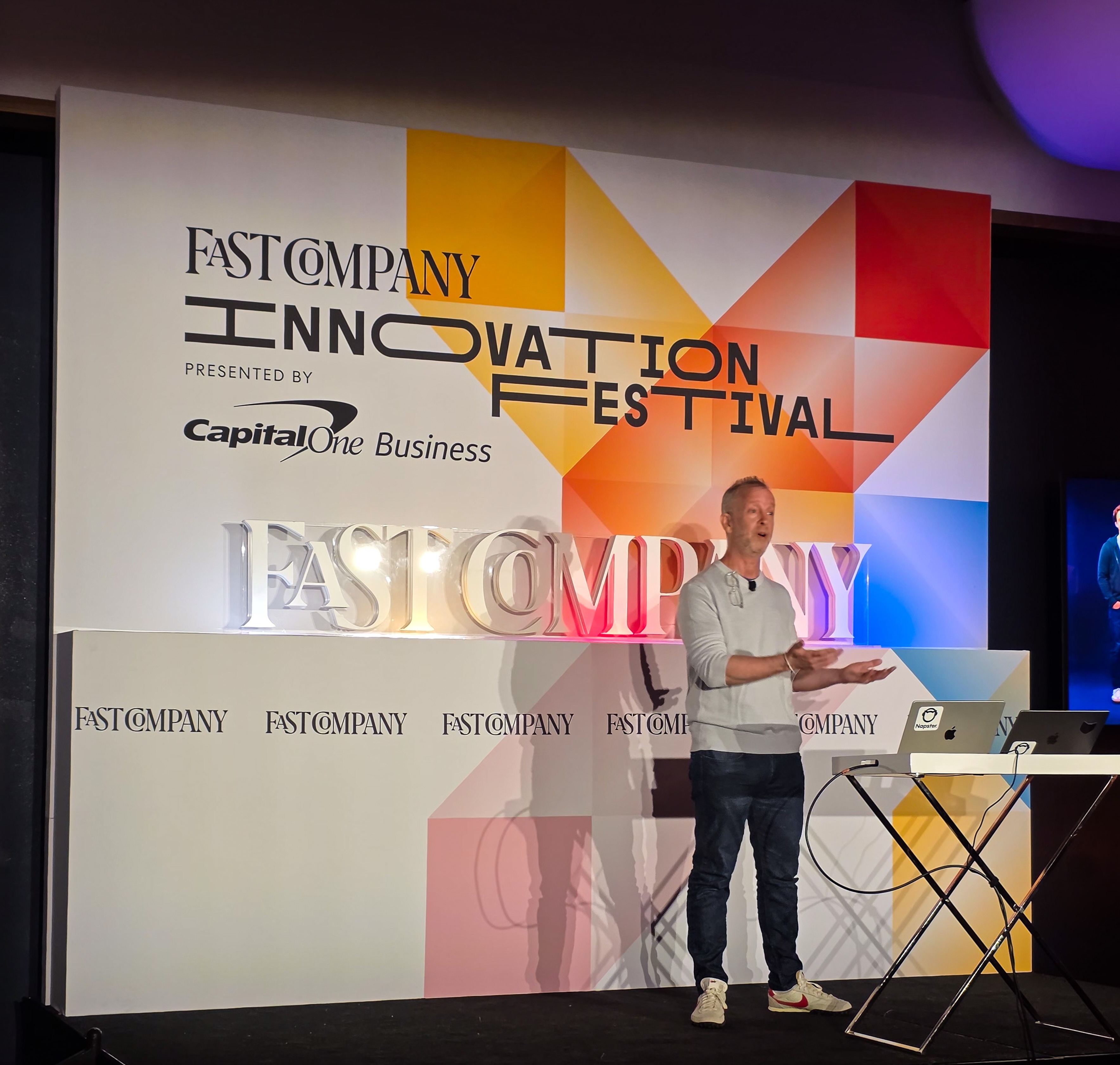
The conversation has moved on from whether AI works to proving it, designing for it, and making the most of its everyday uses
As recently as two years ago, AI was the main headline in most tech stories. It was the leading topic at conferences, with the central question being, “What is this, and what can it do?”.
We are no longer asking that question; in fact, we are far beyond that.
During the Fast Company Innovation Festival in New York City this week, it was clear that AI itself is no longer the topic of discussion. It’s now a given.
AI is ingrained into every conversation as the assumed way the world will work. Nobody at the festival stood up to make the case for AI. Instead, it was baked into nearly every conversation about growth, hiring, customer experience, and product strategy. As AI, and even agents, are increasingly commoditized, it’s crucial to identify uses of this technology that give your organization an advantage no competitor can mimic.
In other words, we are no longer in the discovery phase of AI. We’ve now moved on to a more difficult stage: proving it actually works.
From talk tracks to proof points
Most business leaders can speak about the fact that they’ve implemented AI into their everyday workflow. Some can even point to internal tools and systems they’ve built to improve productivity in a vague way. But few, even now, can put a revenue number onscreen that proves what these systems are actually doing for them.
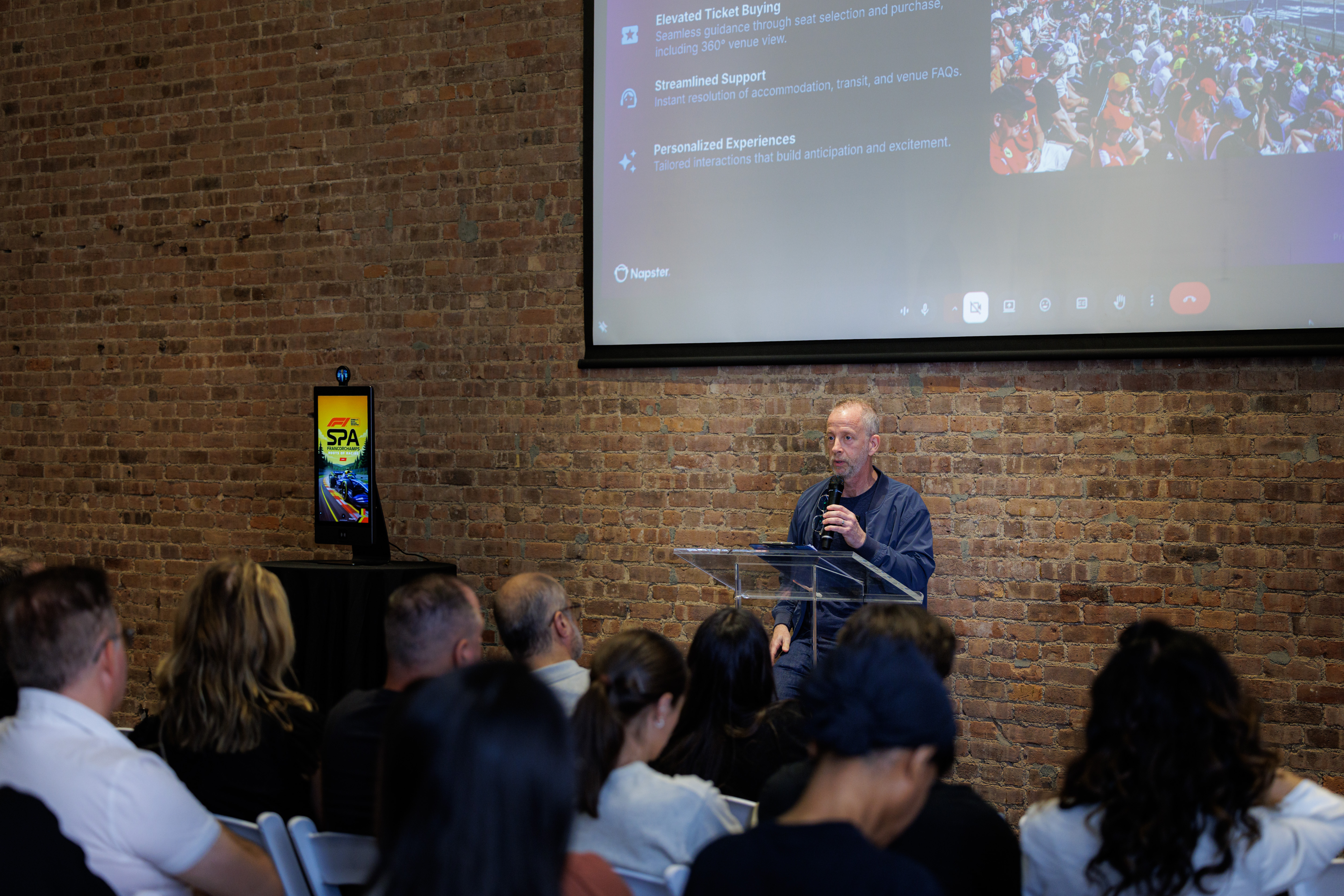
When Napster presented its findings during Monday’s Fast Track session alongside Spa Grand Prix, we were able to speak to the exact results we achieved after building the first agentic AI solution in motorsports ticketing. Napster CPO Ziv Navoth, alongside Spa’s Julien Lalmand, presented the outcomes AI agent Jack was able to achieve in its first 60 days of deployment on the website of the F1 Belgian Grand Prix organizer. Over 55,000 conversations, Jack spoke 21 languages, improved clickthroughs to checkout by 70%, and drove an anticipated $623,000 in incremental revenue. There were few signs of friction, too: 99% of users had a seamless experience working with the agent, even across lengthy conversations about a high-consideration purchase.
The timing of sharing these findings and decision to share them, was important for us. The return on investment in AI remains an open question for many companies, but alongside Spa, we were able to build a clear roadmap for what commercial success with agentic AI looks like, while also showing that end users have an affinity for conversational, embodied AI. This kind of real, tangible evidence is what companies need to make the case for the efficiency of business.
Built for bots, invested in by humans
The disconnect here is one that was always going to happen; we just have to face it now. AI is built so that machines can understand it. But what makes sense to an AI crawler may not read the same to a real human customer, and vice versa. What’s obvious is that brands are still struggling with the push-pull of getting attention from brands or getting attention from bots. Discovery, via bots, is of course crucial, but only real conversation can happen through the humans working with the tech. For some companies, the solution is to invest more in events so these conversations can happen in-person, in real time, while simultaneously making their digital presence more bot-legible. This question remains open and will require a careful balance from brands as they work to answer it.
Tech that leverages output instead of replacing real workers
Another big theme running through the festival was about people, not products. While the frontier call to action lately has been about slowing down development, the people actually at the helm of this tech are facing a more immediate problem: a workforce that's anxious about being replaced by the very tools they're being asked to adopt.
Thankfully, the most encouraging conversations Napster had this week weren’t about replacing humans with AI; they were about how AI and humans can work together now and in the future. This looks like creating agentic coworkers that support employees to do their jobs better instead of taking their jobs away. Some of it is upskilling, plain and simple. Some of it is taking the low-effort, “busy work” tasks off their plates so they can focus on higher-level thinking that requires human expertise and thought leadership.
This week’s conference came on the heels of a frontier-wide conversation about the harm that AI could potentially do to humanity. But the conversation that we champion, and that we were hearing more than anything, was one about how AI can free people up to do more and do it efficiently.
Our takeaway
The early years of AI are over. It’s here, and it’s becoming part of everything we do. What benefit that brings to businesses and customers, however, remains an open question, in large part because companies are secretive about what works – and when things go wrong.
Companies have to do a better job of showing the return on investment, as Spa Grand Prix did, and provide a blueprint that others can leverage. Businesses also have to learn to bridge the gap between AI that plays well with AI and AI that plays well with humans, because to find success, you have to have both. And leaders have to continue reinforcing that replacement with AI is a race to the bottom. These tools need to be ingrained in our workplaces as a commodity for useful change, not act as a cost-cutting measure.
The companies that figure out those three things first will be the most successful in this new age of human-tech partnership.
Related posts
Stay up to date with the latest platform updates, feature launches, and important news.

The Business World of Tomorrow Belongs to AI – and Humans
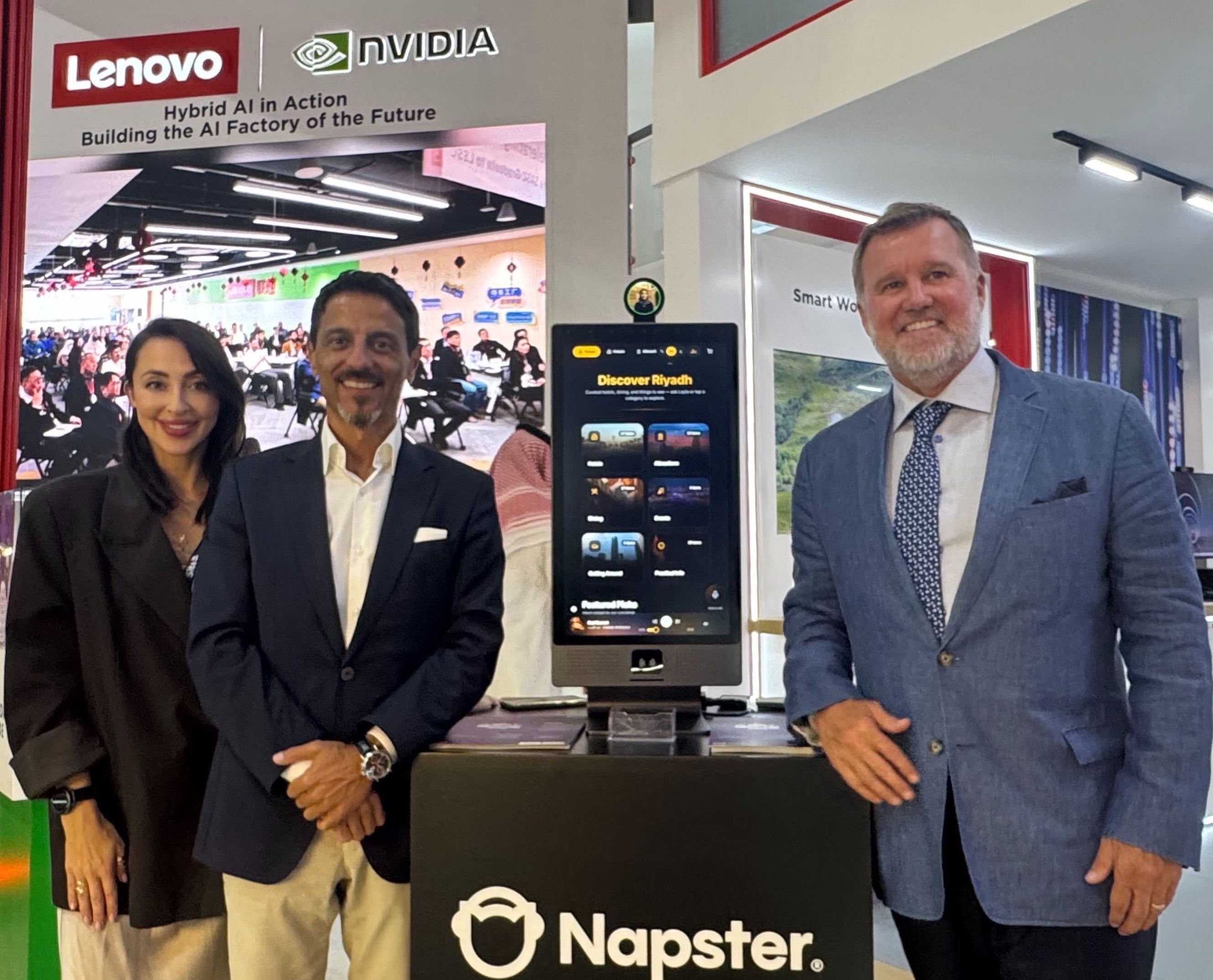
At LEAP 2026 in Saudi Arabia, Frank Furnari, general manager for Saudi Arabia and senior vice president at Napster, spoke about the future of AI in the workplace, where humans work together with AI agents. He advised entrepreneurs to “focus on the problem and then use all the technology available today and in the future to actually solve that specific problem.”


Press inquiries.
Journalists and media professionals can contact our team for interviews, information, or additional materials.