A Team of One: How to Build Your Own Crew With AI
Building a crew used to mean knowing the right people. Now it means knowing how to use the tools you already have to fill new functions.

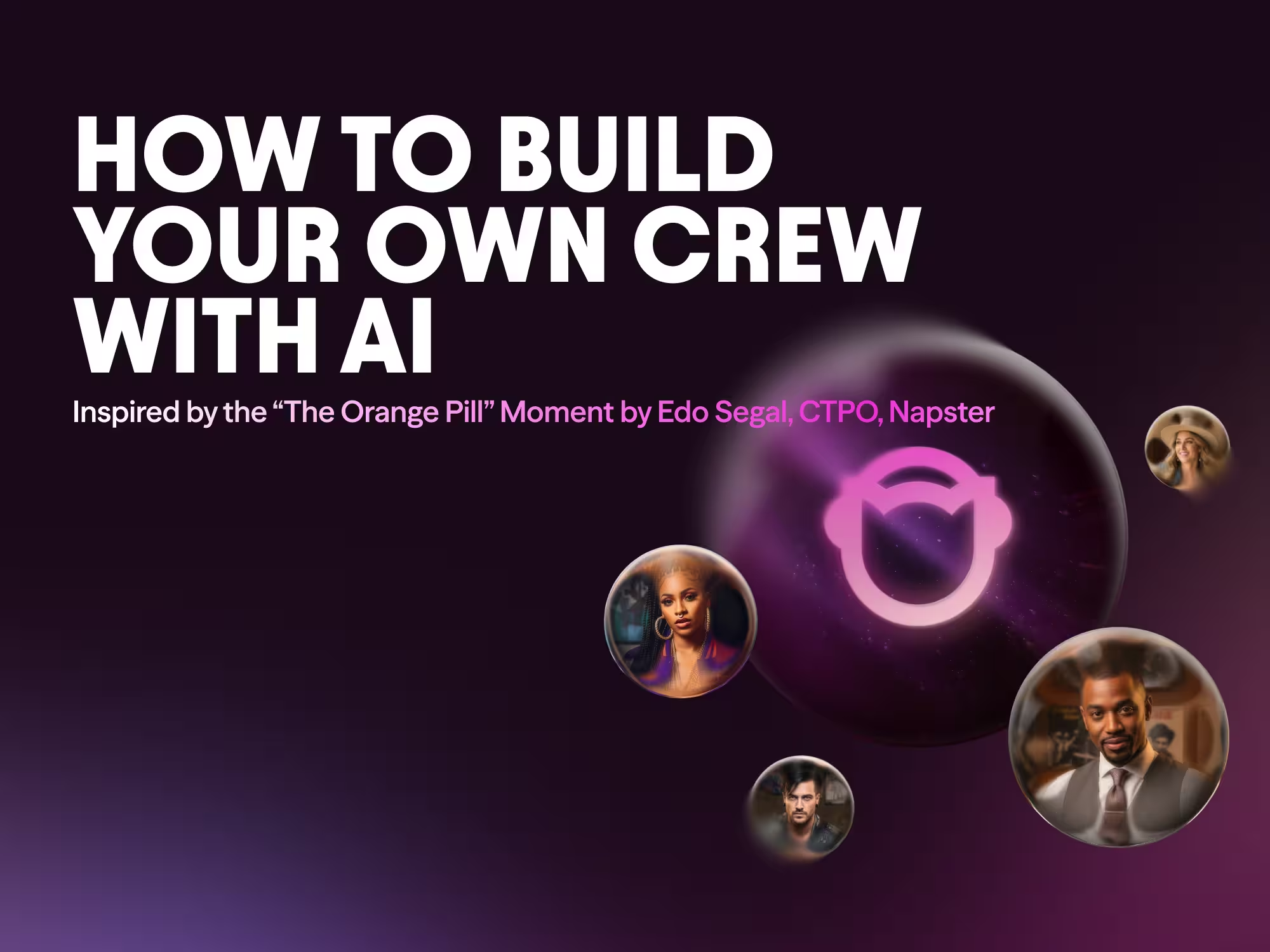
Napster’s Chief Technology and Product Officer, Edo Segal, recently shared a look into AI’s “Orange Pill” moment, when Claude Code recalibrated this technology from a tool to, effectively, a limitless, tireless coding partner.
This series explores the practical applications of AI as a thought partner that does its best work when used to enhance, not replace, the human touch. This installment is about access, and what becomes possible when the barrier between “having a great idea” and “having the resources to execute it” starts to collapse.
The resource gap has always been the real gap
Edo’s Orange Pill piece includes an image that stuck with us: a student in Dhaka who now has access to the same coding leverage as a principal engineer at Google. The comparison points to something most people who have worked without institutional support already know.
The gap between a good idea and a finished product has rarely been about talent. It has almost always been about resources: time, money, and access to the right expertise at the right moment.
.png)
AI flattens the resources required, especially when it’s treated not as a generalist, but built like a team, with individual personas working toward a particular goal. Building a crew of agentic specialists, each trained on a specific domain, gives you better distributed skillsets and perspectives than any single tool can.
Advances in AI’s persistent memory is one of the key catalysts for the Orange Pill moment. Current AI systems can recall what you’ve tried, what’s worked, and what you keep coming back to, at times better than a human teammate can. That continuity unlocks opportunities for development and growth, not just for the companions you create and the project you’re working on now, but for the next one, and the one after that.
This is what democratized access to expertise looks like in practice: A set of persistent, specialized relationships that compound over time, the same way the best professional relationships always have.
The Dhaka student and the Google engineer aren’t the same. Experience, network, and context still matter. But the gap between “I have an idea” and “I have the resources to find out if it’s a good one” is narrower than it has ever been.
Five ways to build your crew
.png)
Making this shift is less about finding the right tools and more about changing how you approach the work. Here’s a practical starting point.
- Assign roles before you start. Before opening a new session, decide what kind of help you need. Being specific about the role, whether that’s “I need a skeptic” or “I need a subject matter expert,” produces dramatically better results than a generic prompt.
- Match the specialist to the problem. Resist the impulse to use the same companion for everything. AI built around creative brainstorming will approach a financial modeling problem differently than one built around analytical rigor. Use the right specialist for the right kind of work.
- Build context deliberately. Persistent memory turns individual interactions into a relationship, but only if you invest in it. At the start of a new project, take five minutes to brief your companions: what you’re trying to accomplish, what constraints matter, what you’ve already tried.
- Let your crew cross-pollinate. Bring the output of one specialist into the session of another. Cross-domain review consistently catches blind spots that any single perspective misses, and it takes less time than you’d think.
- Stay the one who decides. A crew without a director isn’t a crew. AI handles a remarkable amount of the execution, but the strategic calls, the final read, the choice to click the publish button — those stay with you.
Building a crew used to mean knowing the right people. Now it means knowing how to use the tools you already have, intentionally and in combination. Regardless of your background and the height of your ambitions, there’s a process for building toward those goals and a crew ready to help you on your way.
Start with one role. Fill it well. Then add another.
Related posts
Stay up to date with the latest platform updates, feature launches, and important news.




Press inquiries.
Journalists and media professionals can contact our team for interviews, information, or additional materials.