From Doing to Deciding: Your New Job Description in the Age of AI
This edition of the Orange Pill blog series focuses on a shift that will touch every professional: the move from execution to judgment.


Napster's Chief Technology and Product Officer, Edo Segal, recently shared a look into AI's "Orange Pill" moment, when Claude Code recalibrated this technology from a tool to, effectively, a limitless, tireless coding partner.
The results are both staggering and mixed. On one hand, workers are finding time to think creatively and focus on strategic decisions rather than low-effort, time-intensive tasks. On the other, company leaders are questioning what staffing looks like, and what work-life balance looks like, when one person can, conceptually, do the work of many.
This series explores the practical applications of AI as a thought partner that does its best work when used to enhance, not replace, the human touch. It will also take a look at how to navigate shifting roles and responsibilities, avoid burnout, and acclimate to the new frictions of an AI-enabled workplace.
This installment is about a shift that will touch every professional, in every field: the move from execution to judgment, and what it means for how you spend your time.
The value of 'doing' is changing
Consider how much of a typical workday is pure execution: formatting a report, sorting data, writing a first draft from a template you've used dozens of times. This is work that takes hours without requiring much creative energy, and for most professionals, it represents a significant portion of the week.
AI is compressing that time dramatically and freeing up time to focus on the good, impactful stuff. As Edo put it in his piece: "When production is cheap, the premium shifts from execution to judgment." The professionals who will have an edge going forward are less likely to be the ones who produce the most output, and more likely to be the ones who make the best calls.
That's a meaningful reorientation, especially for junior employees who are typically tasked with doing. Most careers are built around the ability to deliver reliable output efficiently. The new, and potentially scary, question is what do you do when hours of low-effort work are no longer a blocker and expectations rise?
What judgment actually looks like
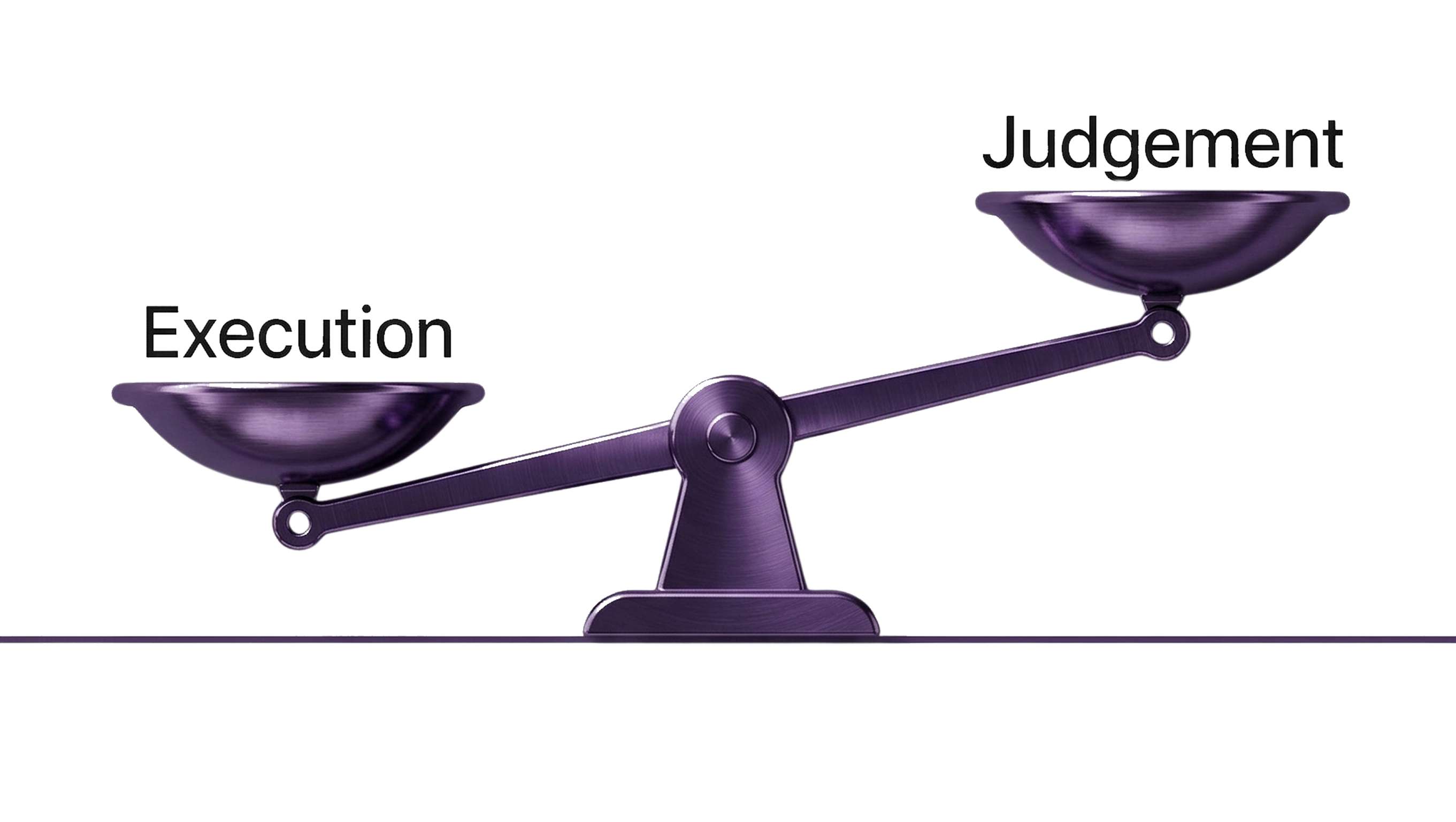
So, if it isn’t your job to draft that executive memo or run the numbers anymore, what do you do to replace that work? You move from the foundational doing to deciding the best way to communicate your message or your project, then get on to bigger and better things.
In an AI-enabled workflow, judgment looks like reviewing ten generated options and knowing which one, or which pieces of one, are right. It’s understanding your audience well enough to catch what the machine got subtly wrong. It’s asking a sharper question at the start of a project, because the quality of your output will only be as strong as the clarity of your thinking going in.
Edo describes this as the "ascension" of friction. The tedious layers of work, the syntax errors, the formatting, the boilerplate, are already handled. What remains is harder in a different way and requires taste, vision, and the ability to think at a systems level about what you're actually trying to accomplish.
AI saves you time; use that time on people
Setting aside more time for visionary thinking is a great goal. It is also a ridiculous request to make of someone on Day 1 on the job or one who is new to the workforce in general. That is why it’s important for freed-up time to trickle down to the junior level, with managers using their extra bandwidth to help their teams develop and grow.
Great leaders reinvest their time into their people, and AI used properly offers an opportunity for more human interaction and coaching. Moving forward, the leadership mandate is focused on shortening the learning curve across the organization and making everyone feel comfortable operating as a decision-maker.
These capabilities are learnable, and they compound; they just can’t take years to develop anymore.
Ready or not, there's a productivity chasm opening between people who have integrated AI into their workflows and those who haven't, whether it’s a person stepping into their first professional role or a routinely high performer. Workers using AI on routine tasks are freeing up real time, and the ones redirecting that time toward more meaningful work are pulling ahead.
But remember: Clearing your schedule is only useful if you're intentional about what replaces it. The goal is to trade up, not to do the same work more quickly.
How to start delegating
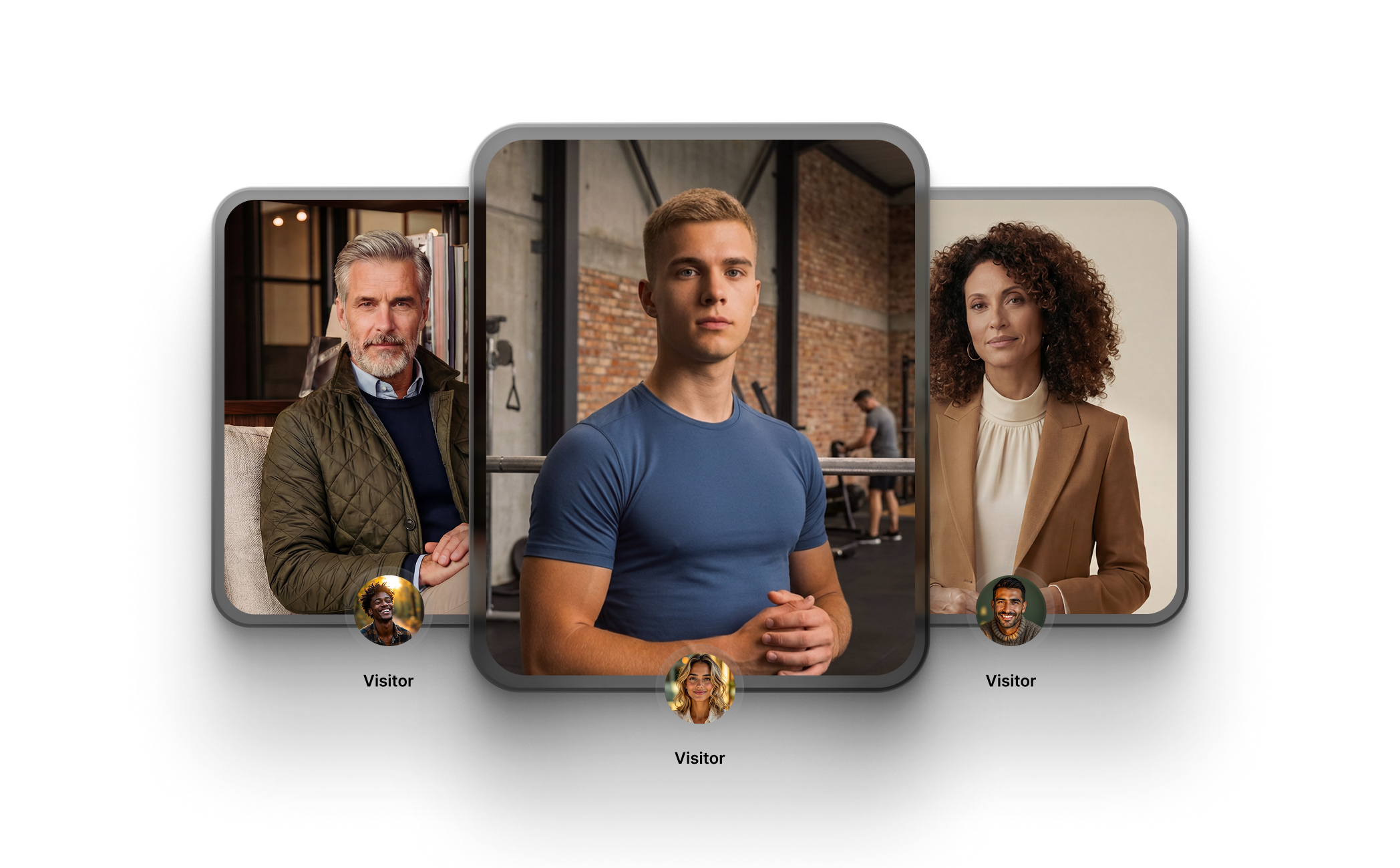
Making this shift starts with an honest audit of where your time actually goes. Napster Companions are designed to take on the work that fills your day without requiring your best thinking, so you can focus on the decisions that genuinely need you.
Here's a practical way to approach it:
- Make a list of your most time-intensive, low-judgment tasks. Weekly reports, data upkeep, first-draft content, meeting summaries — anything that follows a recognizable formula. These are the best starting points for delegation.
- Break down how those deliverables get made. What inputs do they require? How much personalization do they need? Which steps matter most, and which are mostly connective tissue? Understanding the anatomy of your routine work makes it easier to hand off cleanly.
- Ask AI to help you build the template, not just fill it. Give your AI companion an example of a finished product and ask it to work backward through the process. This creates a repeatable system rather than a one-time shortcut.
- Protect the space you free up. Be deliberate about redirecting reclaimed time toward strategy, relationships, and creative problem-solving. Left to chance, it tends to fill back up with the same low-stakes work you just offloaded.
- Stay the final decision-maker. Whatever AI drafts, you review and approve. Your name is on it. The point of moving faster through production is to spend more time on the editing, refining, and deciding that requires your actual judgment.
A good architect doesn't lay every brick, but understands the building better than anyone else on the site. That's what work looks like now, or will very soon: less focus on output volume, more on the quality of the calls you're making and the clarity of the vision driving them.
AI takes care of a lot of the former. The latter is still entirely yours.
Related posts
Stay up to date with the latest platform updates, feature launches, and important news.





Press inquiries.
Journalists and media professionals can contact our team for interviews, information, or additional materials.