Filling Space: How AI Can Act as a Creative Catalyst
The most difficult part of writing is almost always the beginning, and AI can help you overcome that and much more.

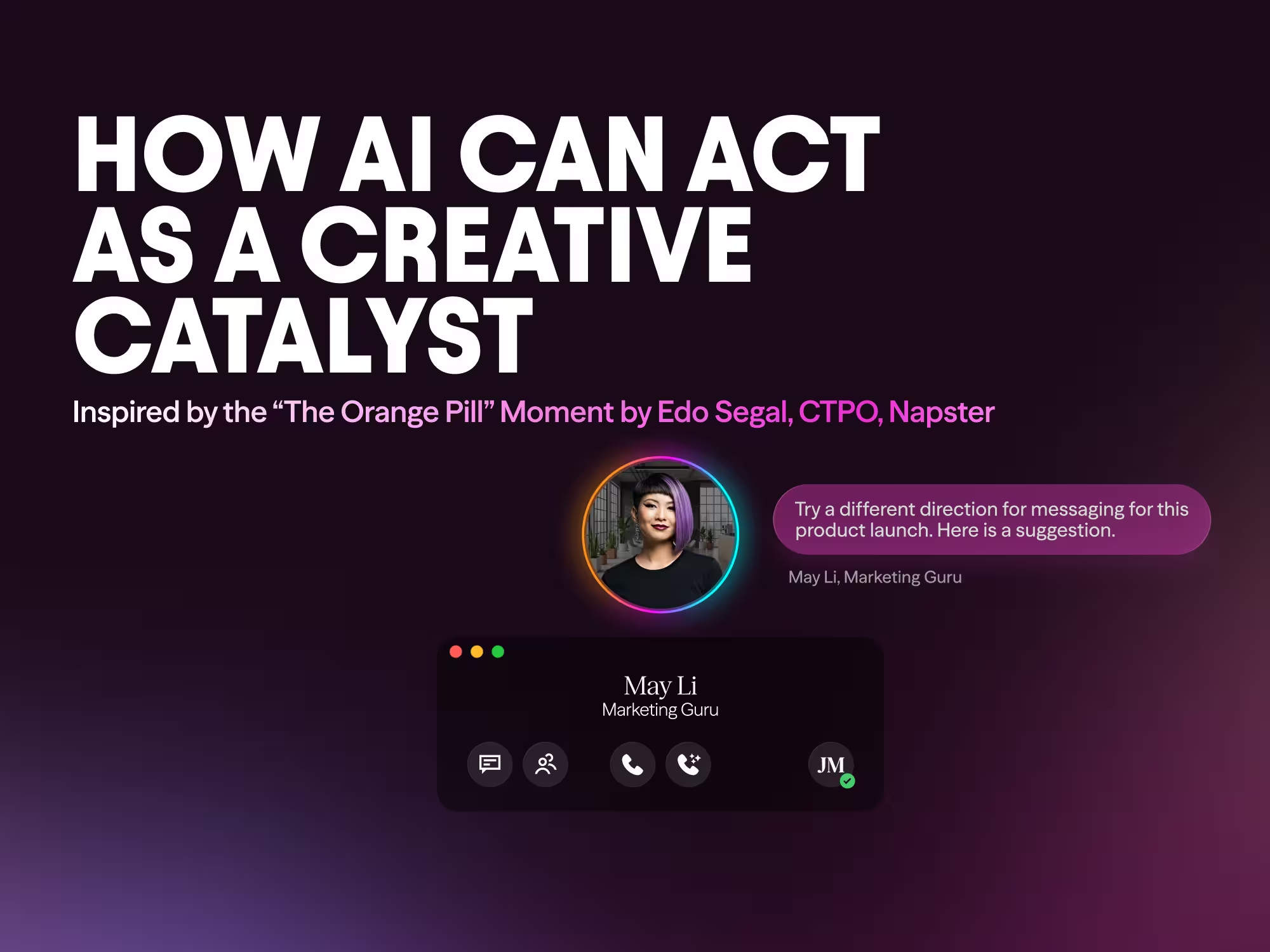
Napster’s Chief Technology and Product Officer, Edo Segal, recently shared a look into AI’s "Orange Pill" moment, when Claude Code recalibrated this technology from a tool to, effectively, a limitless, tireless coding partner.
The results are both staggering and mixed. On one hand, workers are finding time to think creatively and focus on strategic decisions rather than low-effort, time-intensive tasks. On the other, company leaders are questioning what staffing looks like, and what work-life balance looks like, when one person can, conceptually, do the work of many.
This series explores the practical applications of AI as a thought partner that does its best work when used to enhance, not replace, the human touch. It will also take a look at how to navigate shifting roles and responsibilities, avoid burnout, and acclimate to the new frictions of an AI-enabled workplace.
We’ll start with a benefit most Claude coders and Napster users are aware of: how AI helps fill space.
AI is never at a loss for words
The most difficult thing is almost always the beginning. Writer’s block. Analysis paralysis. The blank page problem. Whatever you call it, you’re likely familiar with how problematic filling an empty space can be. It’s an enemy of creatives and technical minds alike, and it often takes more time to put together those first few lines – be it words, code, strokes on a canvas, or something wildly different – than the rest of the thing takes put together.
So you sketch it out. You make some word vomit. You spin out a web of ideas and hope that you can pluck something from the noise that makes sense.
.png)
But what if it wasn’t just noise? What if the blank spaces were filled in entirely – maybe not in the way you’d say it, but with a way to say it that you can bounce off of? That’s what AI offers for just about every form of creation and communication. Whether it’s your thought partner or an uneasy ally, AI can make your jumble of thoughts tangible and that disjointed list of tasks manageable.
This philosophy is the foundation of Napster’s embodied Companions and Artists, subject experts designed to help users get through the messiest parts of creation more easily. Whether someone is creating a song, scaffolding a new application, drafting a complex project plan, or organizing a media library, the goal is to get to a functional starting point in minutes, work together to make it perfect, and take the learnings from that content into every interaction afterward.
You never have to start from zero, and that head-start will let you focus less on how to begin and more on how what you create looks from start to finish.
Where does the time go?
When the cost of production and the effort required for a first draft drop, the role of the “human in the loop” changes. The focus becomes taste, creativity, focus, and the big picture.
That, like all changes, comes with some noticeable benefits and risks. As the Harvard Business Review noted, people are clamoring to fill the blank space AI provides, often by taking on additional low-impact tasks rather than more meaningful work. Meanwhile, companies at the heart of this technology, like Anthropic, are using AI to do more, but more importantly to try new things.
.png)
Don’t let minutiae infiltrate the space AI creates. Use that freedom to approach a project differently, brainstorm fresh ideas, and to ask questions about what’s going well, what could be better, and what might be missing.
Here are a few tips for putting what AI does well and what you do best together to get past the blank page problem.
- Provide your own examples of what success looks like to give the platform a North Star, whether it’s just one great result from a vibe coding session or a body of work that shows how your final products usually look and feel.
- Ask the AI what it needs to most effectively recreate your approach and voice. This could be a series of steps, uploads, or just a prompt or conversation with what you’ve provided in the past as an anchor for what’s new.
- Ask for different takes on the same content by requesting multiple options that have a specific tone, style, or form factor. That next big idea could come from seeing what your latest chapter might look like as a screenplay or finally proving that weekly meeting could actually be an email.
- Set guardrails to prevent hallucinations and keep your AI partner on-track. Some examples include “be concise, and avoid repetition,” “only use information from [insert document names, URLs, etc., here] in this draft,” and including constraints such as word, line, or character counts.
- Iterate and improve by providing your platform of choice with the finished work. Ask it to summarize the differences between the first piece and the last, then request that the platform internalize that feedback for future reference. This will improve first results over time and set additional guardrails for content quality and consistency.
And remember: You’re the final arbiter of the quality and accuracy of whatever an AI drafts. It might work the first time, or it might take some tries, but whatever is created ultimately points back to you. Be sure you’re proud of what’s on the screen, personally, before it leaves your hands.
Related posts
Stay up to date with the latest platform updates, feature launches, and important news.




Press inquiries.
Journalists and media professionals can contact our team for interviews, information, or additional materials.